What's happening in the blueberry FoodTech World

Saturday, May 5, 2018

Race Day Secret!

We have been hearing for decades that blueberries are used in equine feed including race horses, cutting horses and others.   Check out this product and video from Southern Press and Packing Company in Georgia who are pioneering the use of blueberries in equine rations.  The company also makes an excellent blueberry juice under the Regenerate label!
Raceday Secret


Thursday, May 3, 2018

Blueberries and Yogurts

7-11's Healthy Lifestyle Yogurt Drink is a hit in Japan

Several years ago, you would see one or two blueberry-containing yogurts in the dairy case.   Along came Greek Yogurt, specialty yogurts and drinkable yogurts.   Blueberries may not be the most common flavor.  But, blueberries sure do have a major presence in the category in North America and abroad.


Fruit Preps: For yogurts and yogurt drinks, adding blueberries not as easy as just adding blueberries.  Dairy products have very specific requirements obtain homogeneous flavor, texture, color and other specifications.  Most utilize fruit preparations or "fruit preps"  These are formulated products.
Here is an interesting report on the $8.2 billon fruit prep market worldwide.

Fruit Prep Report from Hexa Research

Manufacturers around the world look for high brix, frozen blueberries with soft skins for exuding juice.  Also, purees, puree concentrate and blueberry juice concentrate are used in the dairy sector.


Wednesday, May 2, 2018

Thank you "Big K"


It is that time of the year--a visit to Battle Creek, the home of Kellogg's.  It is a good time to connect with old friends make new, have an extra hot Indian curry with the R & D gang.  Most important -- it is a time to listen, learn and say thanks for all they do for highbush blueberries.

Kellogg's is a global company.  Although the headquarters are located in Battle Creek, Michigan-- they manufacture in 18 countries worldwide and distribute in over 180 countries worldwide.

Kellogg's has always been an innovator in cereals, bars and other items.   Look at all of the developments around the world.  Besides manufacturing, Kellogg's products can be found just about anywhere in the world.

Mintel Global New Product Database


Development: In 2015, Kellogg's announced that it was eliminating artificial colors and flavors in cereals and snacks by the end of 2018. This has led to use of real blueberry purees, puree concentrate, frozen blueberries, dried blueberries and other formats in new and existing products.

Check out Kellogg's new products for 2017 and 2018.  


Go Big K!

>Kellogg's continues to use more blueberry and more blueberry images on the packs.  
>Real blueberries are used in the USA products and most aboard, with a few exceptions which will be topic of conversation.  If we can only get the Real Blueberries ™  seal on the box!
>"Mora Azul" has become the description for blueberries in Latin America which is one of the most innovative areas of product development with blueberries.
>We are seeing the word "real" more and more.  
>Some of the most innovative new items are coming from Latin America and UK production centers.

So with this: Thank you Kellogg's -- See you Wednesday!


Thank you!


Tuesday, May 1, 2018

Happy May Day From China!


Happy May Day (International Worker's Day). This greeting is from the organizers of the upcoming Bakery China Exposition in Shanghai May 9-12.  USHBC will exhibit at this exposition which brings together bakers small and large from all over China.  Our goal is to connect with bakery suppliers who sell to bakeries and buy from importers.   We have met dozens of innovative bakeries all over China who are interested in blueberries and blueberry products.  Now is time to connect the dots on the supply chain.  Updates from the field next week!

Oh yes, you can guess from this poster who the organizer is.

The wording encourages all workers in the world to enjoy celebrate the holiday and take a day off!


Monday, April 30, 2018

April 2018 - New Blueberry Product of the Month

Gluten Free is a big deal!  Here is an example of blueberry use to give flavor and texture.


Highbush Blueberries for the Armed Forces


Since formation, USHBC has been actively seeking ways that highbush blueberries fit into the combat feeding programs of the US Armed Forces.   Our nation operates a system to feed soldiers all over the world.  This includes combat and garrison feeding.  This also includes a whole range of other feeding channels including disaster assistance, aid, emergency feeding and other needs.   (They also source fresh produce for the USDA Foods program)

World Supply Line

The main provider -- the Defense Logistics Agency (DLA) is the hub which gets the foodstuffs into the field.   It works with a network of prime contractors who are qualified to produce or organize shipments and also surge supplies for major needs.   This process requires long range planning, and the Armed forces is always looking for ways to make things better.  With this, they operate one of the most sophisticated research and development laboratories in the world at Natick, Mass.  Fort Lee in Virginia is headquarters of the Armed Forces Quartermaster Corps who do all from logistics to serving.  It is also headquarters of the Award Winning Army Culinary Team.

All products sold into the US Armed forces channel must be produced and processed in the USA.

The soldiers in the field set the tempo for what is needed, and research and development fills this need and works with prime vendors or processors.  In 2017 more than $200 million in rations contracts were awarded by the US Armed Forces.

How does USHBC participate?  We have been members of an organization called the Research and Development Associates.   This is an organization where Military, Government, Academia and Industry get together for fulfilling the needs.   Each year, two conferences are held where the Armed Forces report from the field on what is needed.  For example this includes nutrition, variety, specific dietary needs and performance.

Prime vendors include specialized companies who have the right equipment and capabilities for the rigorous demands of military feeding.  Items must be packed in a manner to service three years at 80 degree F.

These meetings are also an opportunity to suggest new items for testing and to join research and development collaborations.

USHBC is a long standing member, so we are involved in committees, and whenever possible we recommend various blueberry formats, products and inclusions.

Here is an example of a blueberry-containing MRE which has ben a big hit with our warfighters abroad.

Categories for development:
  • Meals Ready to Eat (MRE)
  • First Strike Rations (FSR)  High Caloric, high energy for special ops and attack
  • Special meals for Religious dietary needs.
  • National Guard Rations
  • Humanitarian Daily Rations (HDR)
  • Unitized Group Rations (UGR)  For setting up field serving.
  • Survival Rations
  • Abandon Ship Rations
  • Aircraft Survival Rations
  • Performance Readiness Bard
The Blueberry Granola with Milk utilizes lots of freeze dried blueberries.  When mixed with water it is like a home style granola..


Other Blueberry containing items in the system include:
  • Blueberry retort pouch baked rations with blueberry and fillings
  • Infused dried blueberries
  • Freeze dried blueberries
  • Blueberry purees in sauces
  • Blueberry cobbler
  • More in the works!
  • If you have any ideas or suggestions for rations, let me know!  


Sunday, April 29, 2018

The USA Blueberry Legacy in South Korea


Now that we are all inspired by Korea "Mascot Mania," let's take a look at the market.
US Shipments of highbush blueberries to South Korea:  1999 = 0 lbs.  2016 = 9.6 million lbs. The market has cooled off since 2016 with lots of competition and political and economic instability, but we are battling back with hard work and creative promotions.  Korea is still a top export destination for frozen blueberries and a legacy USHBC can be proud of.


1999 - the year before USHBC was formed. 

0 kg of frozen highbush blueberries shipped to South Korea.


USHBC conducted its first marketing activity in 2002 which was a blueberry health seminar run in conjunction with cherries.  We started talking about the emerging new research on blueberries and antioxidants from the USA.

2004 - These are the times that try men's souls... Thomas Paine 1776  

195,903 kg (431,892 lbs.) of US frozen highbush blueberries shipped to South Korea.


USHBC faithfully attended the yearly Food and Hotel Korea exposition.  It was a lonely booth and the talk of the town was lemons, pomegranates and black raspberries.  Koreans are very trend oriented and tend to go from one to another.  One of the large Japanese trading companies sent a young staff to the show in 2007 to check out market prospects.  He sent a report back to HQ that "there was little or no potential for frozen blueberries in South Korea."

2007 - The Start of Blueberry Fever.  

750,298 kg (1.65 million lbs.) of US frozen highbush blueberries shipped to South Korea


Late one evening we received a call from MBC, the largest TV network in Korea.  Their research staff had read details on Dr. James Joseph at Tuft's University.  They were planning a segment on a popular news program which runs prime time.   Guest hosts would be two of the most influential food and health experts in Korea. We hustled film, background details and graphics.  Note the USHBC materials in the background.  Blueberries were on the way to stardom!


Between 2011 and 2015 shipments of USA frozen blueberries soared from 1.3 million kg (2.86 million lbs.) to 4.42 million kg (9.7 million lbs.)  This is a 239% increase!


Rather than retreat from the market in 2005, USHBC picked up the pace of promotions.  We engaged the trade.  Our excellent marketing contractor KBSI in Seoul implemented creative programs to keep the momentum going.  This included our wonderful mascot, beauty related promotions and continual work with the trade.  
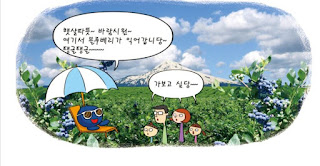
Mascots are important.   USHBC webcast a whole series of Webtunes that perpetuated the blueberry messages.  

Blueberries are now part of Korean food and food as medicine culture.  


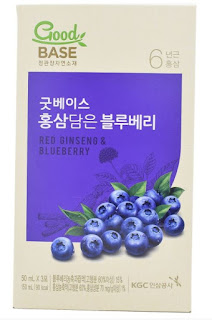
Building the Market.  We returned to Food and Hotel Korea year to year and launched activities towards the Korean food industry.  Our FoodTech Ambassador, Sunyong Lee seems to know everyone in the food business and new products with blueberries soared. In 2018 new products with blueberries have risen +14.5% over 2017.


2017-2018 - Competition!


In Korea, food trends normally last 3-4 years.  We have beaten the odds.  Blueberries are here to stay.  After a 200% gain in the past decade, there have been twists and turns in the market.
>New origin suppliers have come into the market, and have taken significant amount of the hard earned polybag market. One major supply country has a 0% duty and to the buyer this is a discount compared to the USA product that until March 14, 2018 has had duty.  (was reduced in-year-to-year stages)
>Frozen mangos were the trendy fruit for the last two years and occupied a lot of our hard earned freezer space.
>South Korea has been through major political and economic turmoil in the past years with change of government, marches in the streets and a unsettling situation with the DPRK (North Korea)


Moving Forward.  The key to export marketing is persistence.  Our FoodTech program continues to work the Korean food industry.   We find that manufacturers appreciate our frozen product.   New opportunities exist in further processed ingredient solutions such as dried blueberries, purees, juice concentrate and powders.    

USHBC FoodTech is on the move in Korea for the long run!

Note:  All Statistics provided were copied from screen shots of the Global Trade Information Service and are from US Census.